

In the morning, when cock crows from the deepest part of its local cage, Samad Adejumo, a native of Oyo in South-West Nigeria, wakes up to redefine the heritage of his forefathers. Everyday, he masters the unique pieces of ‘Isona’ - a handcrafted inscription, ideating new strategies on how to achieve a global recognition for the craft.
He plods into his workspace to sharpen his tools, at the same time, clearing the previous day’s debris. His hands are typical signs of a worker who is used to small injuries from what he does everyday, yet, new crafts have to emerge.
Samad’s desire to learn ‘Isona’ was born out of the love he has for his family name, the background he comes from and the pride he sees in his immediate environment in Oyo town.
He is from Ago-Isona, a famous compound in Oyo town known for ancient crafting. While growing up, he took this gift from his father, by studying various patterns in his (father) historical library. What he saw while he was young gave him the limitless opportunity to learn artistry from the sage ones around him.
“In my clan, people who know more about ‘Isona’ are getting old, they stitch in a special way by leaning towards their ancient style known as ‘ese-ekute’ (rat’s footprints), this identity must be known globally and that is on me as the youngest amongst them all”, he says.
For him, each traditional stitch is a gold that has not been discovered, it is more than a decoration because it carries historical identities and memories.
‘Isona’, the African Traditional Crafting
Aside from the historical details attached to ‘Isona’, it is a craft that has spanned through oblivious moments but it has never been relegated. In the 19th century, many towns in Yorubaland carried this art to artistic level of influence after the successful migration of Alaafin Atiba from Oyo-ile.
This is backed by research, a 2013 study in the International Journal of Arts and Humanities Bahir Dar, Ethiopia, co-written by Kalilu Razaq and Areo Magret, describes it as an object of luxury - not uncanny among royalties in Yoruba communities - with the sole responsibility for all forms of sewing excluding garments making. Beyond decoration, it adds cultural depth to what they wear, linking their identities to history.
Samad, however, sees ‘Isona’ as a traditional crafting that instills a sense of belonging to us. Anytime the question about his heritage pops up, he lays claim to African history which has been criticised for not possessing any quality apart from the history of colonization.
He believes Isona tells another story, pointing out the existence of civilization before European domination in African history.
In September, 2024, he had an interview with Ifedayo Ogunyemi a journalist at Nigerian Tribune, where he said, “Many people in Africa have also lost touch with their heritage, and they tend to believe that their forefathers and mothers never used adornments.”
He explained the value of these adornments and how we have them in abundance due to our innovative ideas.
“I am not trying to condemn Europeans or their style of leather works, but I am willing to stand tall with my position that African traditional crafting is more unique”, he said.
Tafriculture’s Presence at LLF in 2023 as an Emerging Brand
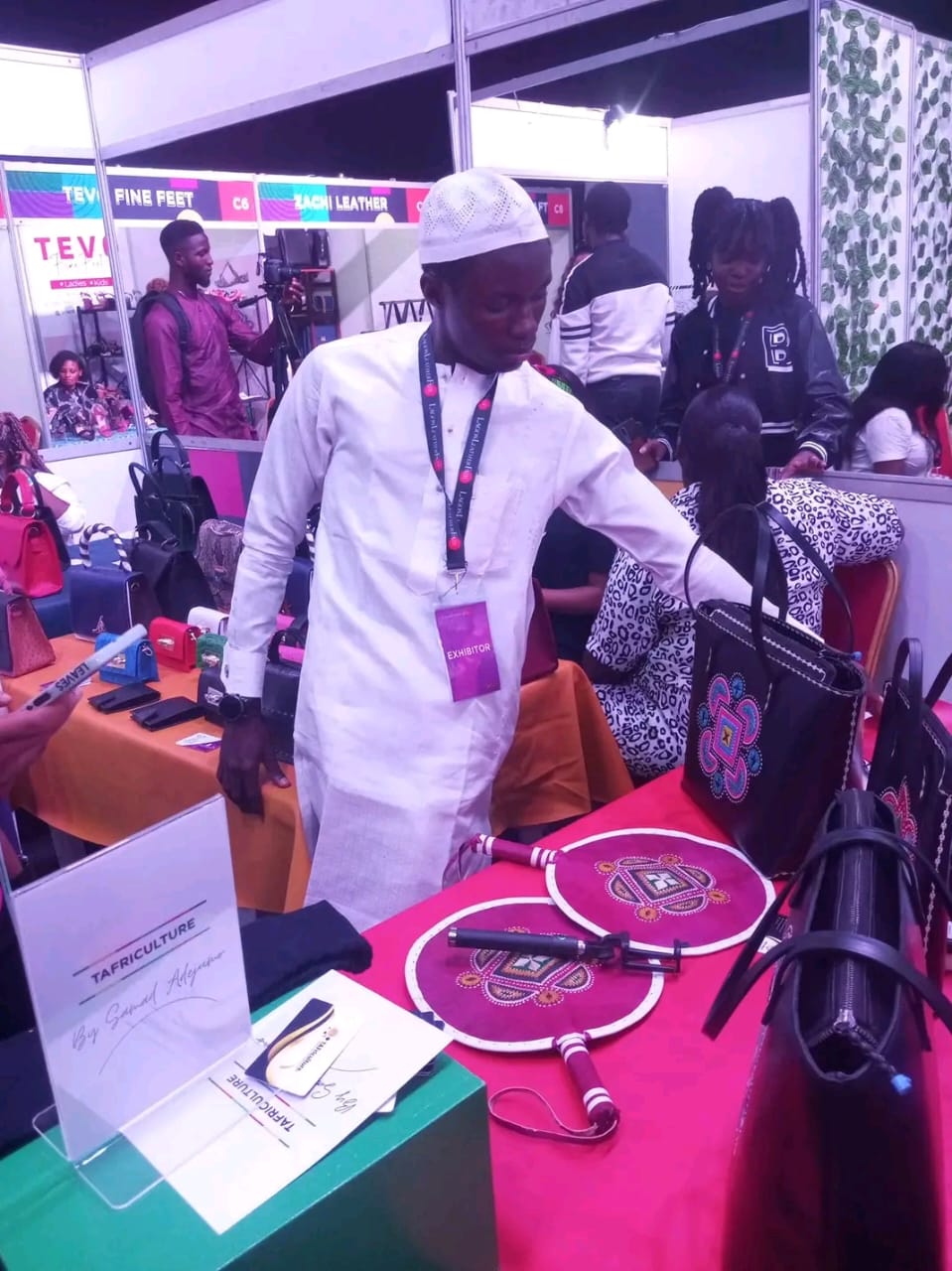
In 2022, as a craftsman from Oyo, he was among the 400 trained leather industry artisans under Kafawa - a sponsored fellowship program funded by My World of Bags and MasterCard Foundation.
This altered the story of ‘Isona’ for him positively. Here, he demonstrated how ‘Isona’ could be marketed on the modern stage - by inscribing traditional crafting on leather materials.
During the interview with OyoTimes, he said, “My work stood out among others. Femi Oyelabi, Creative Director of FemiHandbags gave me a helping hand. She said I should be consistent, and that with time, the recognition would come.”
He noted, however, that the uniqueness of his craft earned him a spot at the Lagos Leather Fair 2023 as an emerging brand. The event took place from June 18-19 at Victoria Island, Lagos state; it showcased West African leather brands, African leather styling, and discussion on scaling of local brands like that of Tafriculture.
“At the event, people admired my brand. They saw it as a rare piece of art in the leather space. People from Africa, Asia, and Europe made good comments about my style of crafting and that was the best outing that propelled me to do more”, he added.
While narrating his financial expectations during the exhibition, he said, “I had thought everything would be easier - making enough money, getting more contacts and meeting other emerging craftsmen like me. To my surprise, I didn't make money but my presence at the event paid off at the end of day.”
Bridging the Connection Between Craftsmanship, Cultural Heritage and Luxury
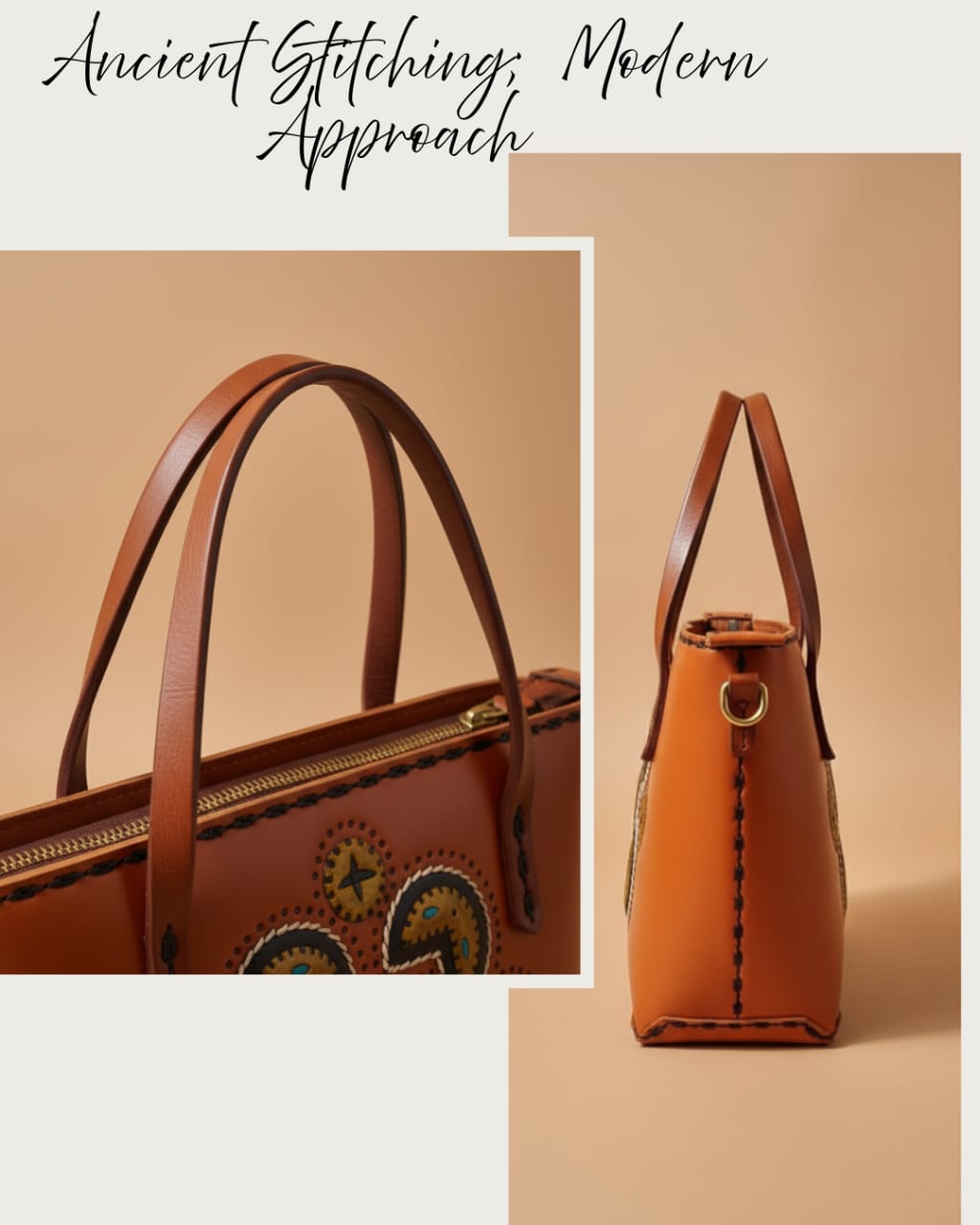
Global attention has tilted toward traditional appearance. Today, everyone — especially Millennials and Gen Z — are more deliberate about what they wear, which may explain the rising appeal of stylish luxury leather apparel. In this wave of cultural revival, ‘Isona’ has emerged as a symbol of reawakening, demonstrating that African craftsmanship has evolved beyond expectations.
Tafriculture, a cultural brand of hope led by its founder Samad Adejumo, is redefining what it means to showcase Africa on the global stage through innovative ancient leather artistry. Traditional stitchings such as ‘ese-ekute’ (rat’s footprints) are no longer ordinary patterns; they have become unique symbols of attraction in today’s modern lifestyle.
According to him, he said, “What I do with Isona demonstrates a powerful retelling of African heritage. This reflects exceptional skill and sparks a creative awakening around how luxury can be authentically African without having to worry about western fashion.”
He explained what Tafriculture embodies, while maintaining centuries of African ingenuity and also reimagining what luxury should mean in a global context.
With Tafriculture, people across the world, from Europe to Asia, North America to South America, can experience a rare form of luxury rooted in identity rather than convention.
He said many do not have to worry, Isona is natural. That is why it's easier to be personalized.
“Through personalized inscriptions and traditional stitches on leather, I am championing a classic African narrative of pride, artistry, and excellence, proving that luxury can be both culturally expressive and globally admired”, he added.
