The air inside the house of the Mogba Sango (the Chief Priest) was thick with the aroma of freshly boiled yams. It was the night of August 7, 2025—the beginning of the World Sango Festival, a 10-day spiritual journey that marks the New Year in the indigenous Yoruba calendar.
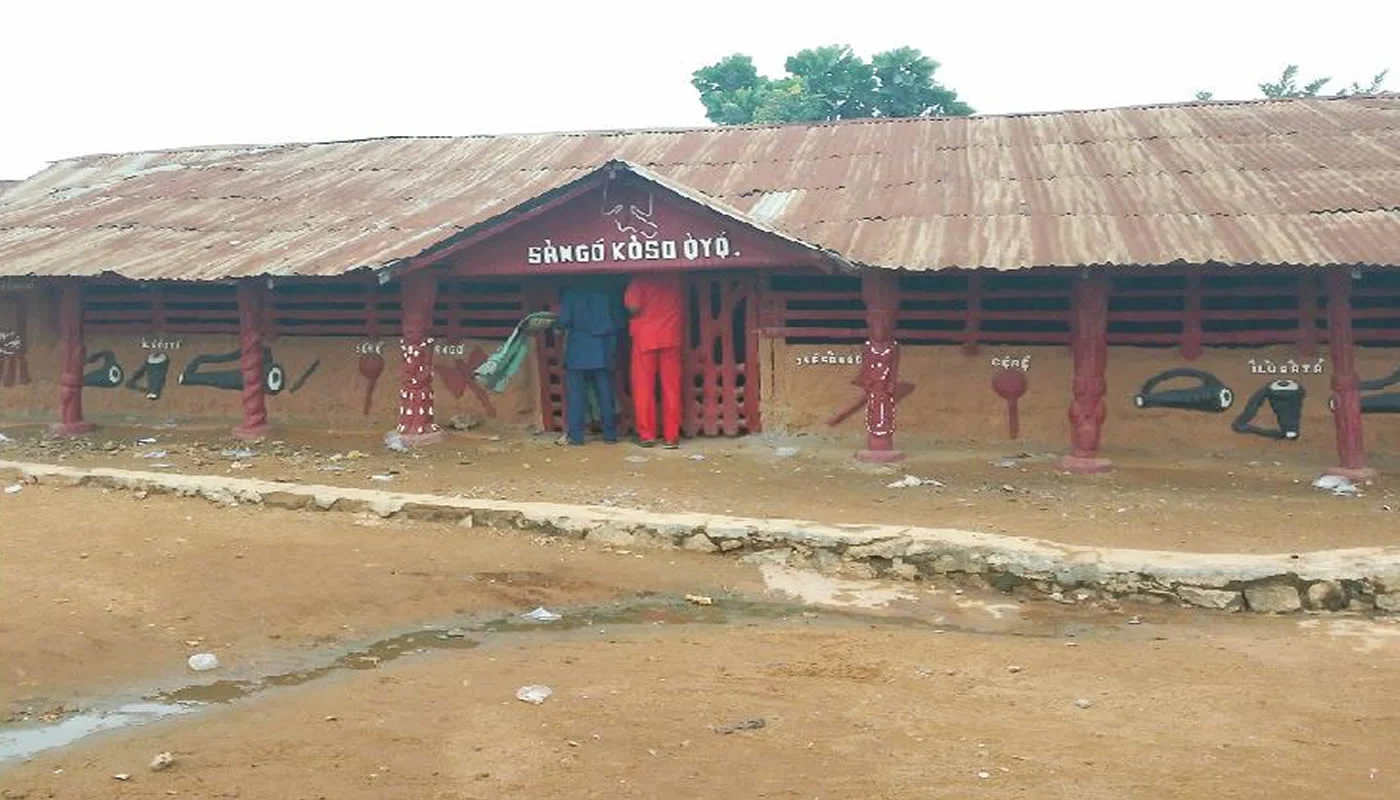
Sitting at the center of the shrine, surrounded by beaded chiefs, the Mogba performed the sacred act. He sliced through the steaming tubers nestled in an ancient calabash and drizzled them with rich red palm oil. This ritual meal, shared among the devotees at the Ojubo Sango Koso, signaled the opening of a festival that honors Sango, the formidable Orisa of thunder and lightning.
Outside, the atmosphere was electric. Fuji music blared, mixing with the rhythmic beats of the Bata drums. While most male devotees sported intricate braids—a style historically linked to Sango—the Mogba himself sat with a clean-shaven head, his wrists and neck adorned with the heavy red beads of his office.
The Yoruba New Year (Aisun Koso)
For the people of Oyo, this is more than just a party. “Aisun Koso” (Night of Koso) is a night of deep historical resonance.
“The new year starts with the beginning of a new 13-month cycle of the Yoruba indigenous calendar,” explained Sangokayode Ibuowo, a Sango High Priest. “August is our new year. From January to June, we are prohibited from eating new yams until they have been ritually cut for Sango. We only eat old yams until then.”
The Divine Selection: Elegun Sango
As the clock struck midnight, ushering in the second day (Koso Day), a roar of “Kabiyesi Sango o!” erupted from the crowd. The new Elegun Sango Oyo, Sangoponle Ibuowo, had been selected.
The Elegun is the living vessel of the deity. Chosen through a sacred Ifa divination using 16 cowrie shells, he is believed to embody the spirit of Sango for the year.
“Once a year, on the last day of the festival, the Elegun will personify the divinity,” explained Sangodoyin Mayowa, a traditionalist. “He will be dressed fully in Sango’s attire and exercise spiritual powers to bless Oyo Town. The Alaafin will temporarily leave the palace during this performance because he must not see Sango Koso while on his throne.”
Inside the Koso Shrine
The Koso Shrine, the spiritual headquarters of Sango worship, is a place of profound history. Its walls are adorned with paintings of white cowries and red carvings of sacred objects—the Bata drum, the Laba (ritual bag), the Sere (rattle), and the Ose (double-bladed axe).
During the festival, the heavy doors were swung open, admitting the priests and the new Elegun.
Chief Sangowale Babalola, the Otun Ipeere Onisango, shed light on the symbolism of Sango’s power:
- Lightning: A sign of Sango’s judgment against injustice, theft, or wickedness.
- Fire from the Mouth: A sign of Sango’s pleasure and greeting, not destruction.
“When we greet Sango, rather than open his mouth to speak, the Ose (axe) speaks for him,” Babalola noted.
The Bond of the Drum
A unique feature of the festival is the omnipresence of the Bata Drum. According to oral tradition, the Bata drum is not just an instrument but a deity in itself, a close friend who once rescued Sango from danger.
“Bata makes Sango’s bones stronger,” Babalola said. “Beating the drum invites Sango to manifest himself in the bodies of his devotees.”
Economic Boom for Oyo
Beyond the spiritual, the festival is a massive economic engine for Oyo Town.
Dr. Wasiu Olatubosun, the Oyo State Commissioner for Culture and Tourism, revealed that visitor numbers to the state have surged from 1,604 daily in 2019 to over 18,000 in 2024.
“During Sango festivals, yam tubers, palm oil, cassava flour, and beans are heavily purchased,” said Muraina Akanni, a yam seller at Akesan Market. “It’s our season. The festival brings the world to our doorstep.”
A Global Heritage
The festival, renamed the World Sango Festival by the Oyo State Government in 2013, gained UNESCO recognition in 2023. Today, Sango is worshipped not just in Oyo, but in Brazil, Cuba, Trinidad, and the United States, where he is known as Xango or Jakuta.
Dr. Paula Gomes, the Cultural Ambassador to the Alaafin, summarized the festival’s universal appeal: “To me, Sango is a respectful, magnificent, and powerful ancestor. The spiritual realm has no limits. Prayer can be accepted in any language to any ancestor.”